

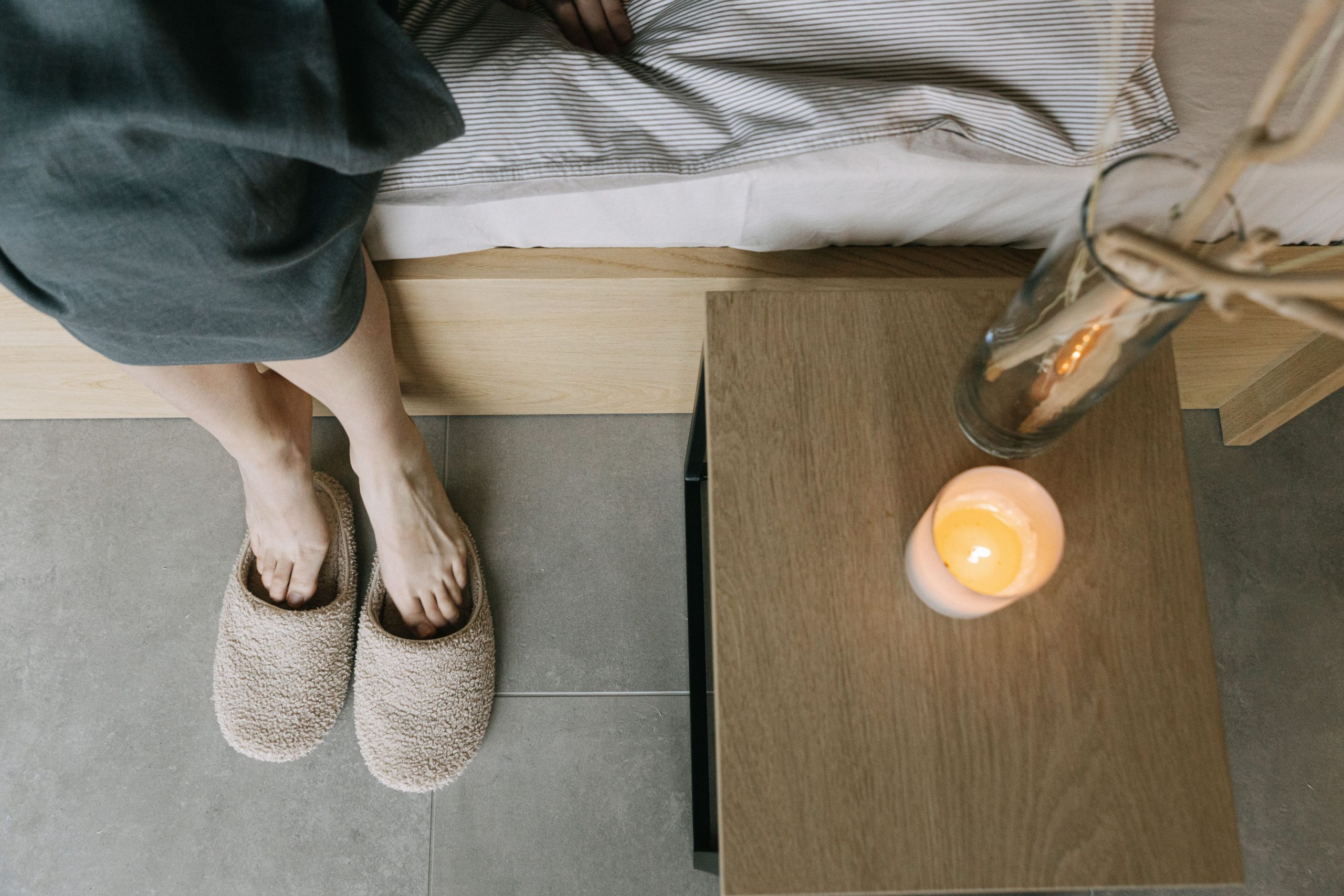
You get out of bed, put your feet on the floor and those first few steps are surprisingly painful.
You hobble towards the bathroom or kitchen, but after you’ve been moving for a while, your feet begin to feel a little easier.
If this happens regularly, you might wonder why your feet can hurt so much after doing nothing more strenuous than sleeping.
Foot pain when you first get out of bed can have several causes. However, that pattern of discomfort during your first few steps, particularly around the heel or arch, is commonly associated with plantar heel pain.
Why does foot pain when you first get out of bed happen?
One possible cause is irritation of the plantar fascia.
The plantar fascia is a strong band of connective tissue running along the bottom of your foot from your heel towards your toes. It plays an important role in supporting the foot as you stand and walk.
Pain associated with the plantar fascia is often felt around the underside of the heel or arch.
A particularly recognisable feature is that the first few steps after sleeping or resting can be uncomfortable. The pain may then ease somewhat as you begin moving, although longer periods of standing, walking or running can make it worse again.
You may hear this problem called plantar fasciitis or plantar fasciopathy.
But heel and foot pain can have several causes, so morning pain alone doesn’t tell us exactly what is happening.
Why might your feet have started hurting now?
Sometimes the most useful question isn’t simply “what is this?” but “what has changed?”
You’ve increased your activity
Have you recently started walking more? Taken up running? Returned to exercise? Spent a holiday walking much further than usual?
A sudden change in activity can place greater demands on tissues that haven’t had time to adapt.
You’ve changed your footwear
Your shoes affect how forces are distributed through your feet.
A switch to different shoes, spending more time barefoot on hard floors or wearing footwear without much cushioning or support may coincide with symptoms for some people.
Your calves are tight
Movement at your ankle and flexibility through your calf can influence how your foot moves when you walk.
Reduced calf flexibility is one of several factors that may be associated with plantar heel pain.
You’ve simply been doing more on your feet
It doesn’t have to be exercise.
A new job that involves standing, a weekend spent gardening or sightseeing, or several unusually busy days can all increase the amount of load going through your feet.
What can you try for foot pain first thing in the morning?
If your symptoms are mild and there hasn’t been an injury, there are some simple things you can try.
Start gently
Rather than jumping straight out of bed and rushing downstairs, try moving your feet and ankles gently before you stand.
Gentle stretches for the foot and ankle are among the self-care measures commonly recommended for plantar heel pain.
Look at what you’re wearing
If you spend much of the day barefoot or in very flat, unsupportive shoes, experiment with comfortable, well-fitting footwear that offers cushioning and support.
If you’re unsure what is suitable for your particular feet, a podiatrist can help.
Think about recent activity
If your symptoms appeared after a big increase in walking, running or standing, consider temporarily reducing the activity that aggravates your foot rather than pushing through increasingly painful symptoms.
That doesn’t necessarily mean stopping everything. It may simply mean adjusting the amount you do while the irritated tissues settle.
Build back gradually
Once things begin to improve, avoid immediately jumping back to your previous activity level.
Gradually increasing walking, running or exercise gives your body more opportunity to adapt.
How can podiatry help?
Feet come in many different shapes and sizes, and there isn’t one “perfect” foot type.
A podiatrist can assess your feet and lower limbs, look at how they function when you stand and move and consider factors such as footwear and activity.
At Luck’s Yard Clinic, the podiatry team provides assessment and advice for foot, ankle and lower-limb problems, including heel pain, and can carry out biomechanical assessments where appropriate.
Depending on what is found, management may include footwear advice, exercises or other measures appropriate to your individual needs.
How may physiotherapy help?
Physiotherapy may also be useful when heel or foot pain is related to a musculoskeletal problem.
At Luck’s Yard Clinic, musculoskeletal physiotherapy includes treatment and rehabilitation for plantar fasciitis, heel pain, Achilles tendon problems and other joint and soft tissue conditions.
Your physiotherapist can assess factors such as movement, strength and flexibility and help you build an appropriate exercise and rehabilitation plan.
When should you seek medical advice?
Not all foot pain is plantar heel pain.
See a GP if the pain is severe or stopping you doing normal activities, is getting worse or keeps returning, or hasn’t improved after around two weeks of self-care. You should also seek advice if you develop tingling or loss of feeling in your foot.
If you have diabetes and develop foot pain, seek medical advice.
If pain began after an injury and you think you may have broken your foot, seek urgent medical advice rather than trying to manage it yourself.
Fed up with dreading those first few steps?
Foot pain when you first get out of bed may be common, but that doesn’t mean you have to simply put up with it.
Understanding what is contributing to the discomfort can help you make more useful changes, whether that’s adjusting your activity, changing your footwear or following a specific rehabilitation programme.
The podiatry and physiotherapy teams at Luck’s Yard Clinic can assess foot and heel problems and help you decide on the most appropriate next steps.
Sources
- NHS: Plantar fasciitis
- NHS: Pain in the bottom of the foot
- NHS: Heel pain
- Dorset HealthCare University NHS Foundation Trust: Plantar fasciitis
- BNSSG NHS My Joint Health Hub: Plantar fascia pain
- Luck’s Yard Clinic: Chiropody and Podiatry
- Luck’s Yard Clinic: Musculoskeletal Physiotherapy & Sports Rehab